


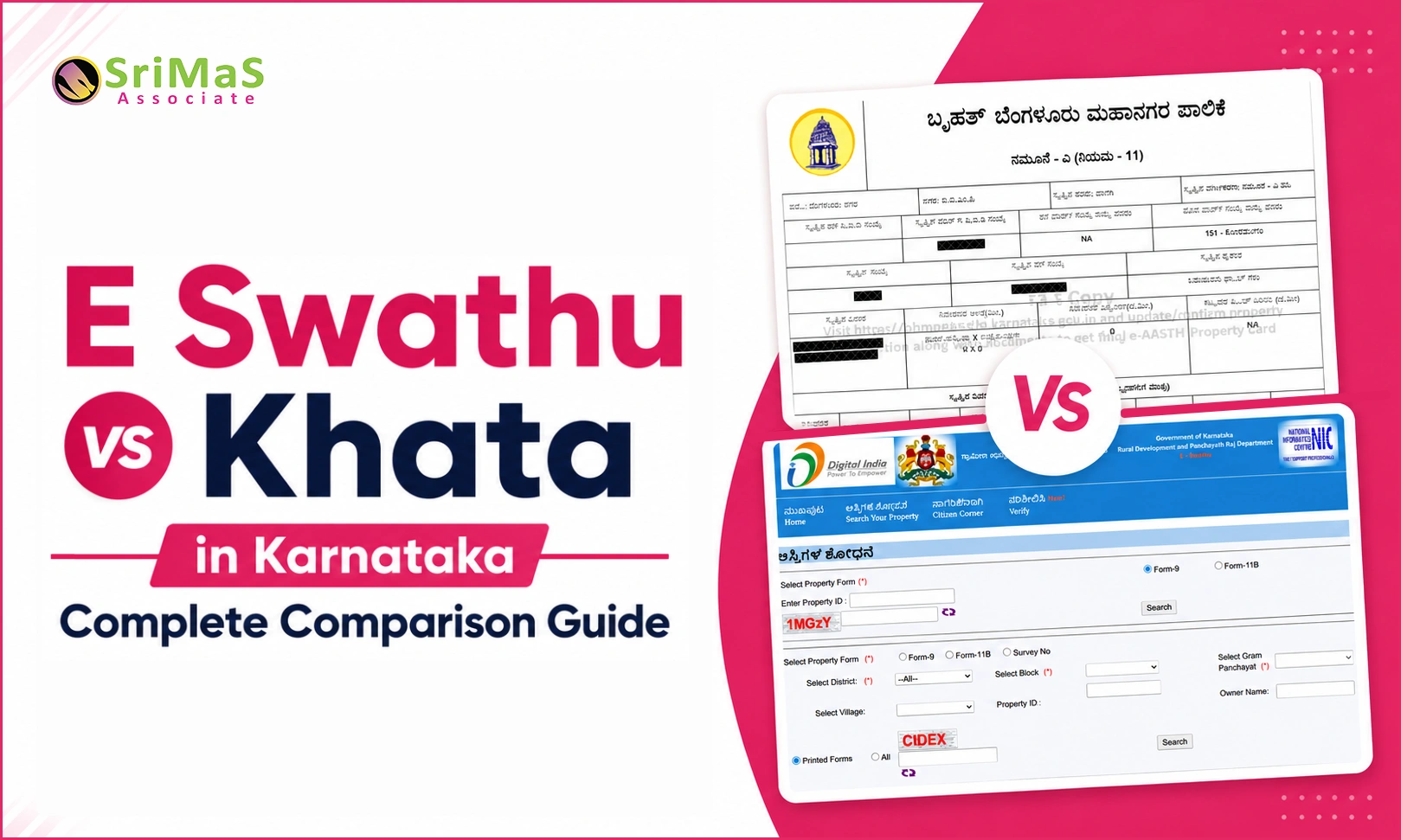
When buying, selling, registering, or verifying a property in Karnataka, two terms often create confusion: E Swathu and Khata. Many property owners think both are the same, but they are used in different property record systems and different local body areas.
In simple words, E Swathu is mainly connected with Gram Panchayat property records, while Khata is commonly used for municipal property records such as BBMP Khata, city corporation Khata, and e-Khata. Both help identify property details, tax records, ownership-related entries, and civic body records, but their purpose and issuing authority are different.
This blog explains the difference between E Swathu vs Khata, their uses, documents, and importance for property owners in Karnataka.
What Is E Swathu?
E Swathu Karnataka is an online property record system used for properties under Gram Panchayat limits. It helps maintain and issue digital property-related documents such as Form 9, Form 11A, and Form 11B for non-agricultural properties under Gram Panchayat jurisdiction.
E Swathu is commonly used for rural and semi-urban properties that fall under Gram Panchayat areas. It helps property owners, buyers, sellers, and officials verify property details in a more transparent way.
The main purpose of E Swathu is to reduce unauthorized property transactions, improve property tax records, and make Gram Panchayat property documentation more systematic.
What Is Form 9 in E Swathu?
Form 9 is an important document issued by the Gram Panchayat for non-agricultural properties under its jurisdiction. It is related to property assessment and is commonly required for property registration and property verification in Gram Panchayat areas.
Form 9 may be issued for properties such as:
- Gramathana sites
- Approved layout sites
- Converted non-agricultural properties
- Government housing scheme sites
- Properties with required approval and verification E Swathu documents
For buyers, Form 9 helps confirm that the property is recorded with the Gram Panchayat and has basic property assessment details.
What Is Form 11 in E Swathu?
Form 11 is also issued by the Gram Panchayat and is related to the demand, collection, and balance of land and building tax. In simple words, it is connected with the property tax register maintained by the Gram Panchayat.
Form 11 helps show whether the property is recorded for tax purposes. It is useful during property transactions, tax verification, and registration-related checks.
In E Swathu, you may commonly see terms like Form 11A and Form 11B, depending on the property type and record status.
What Is Khata?
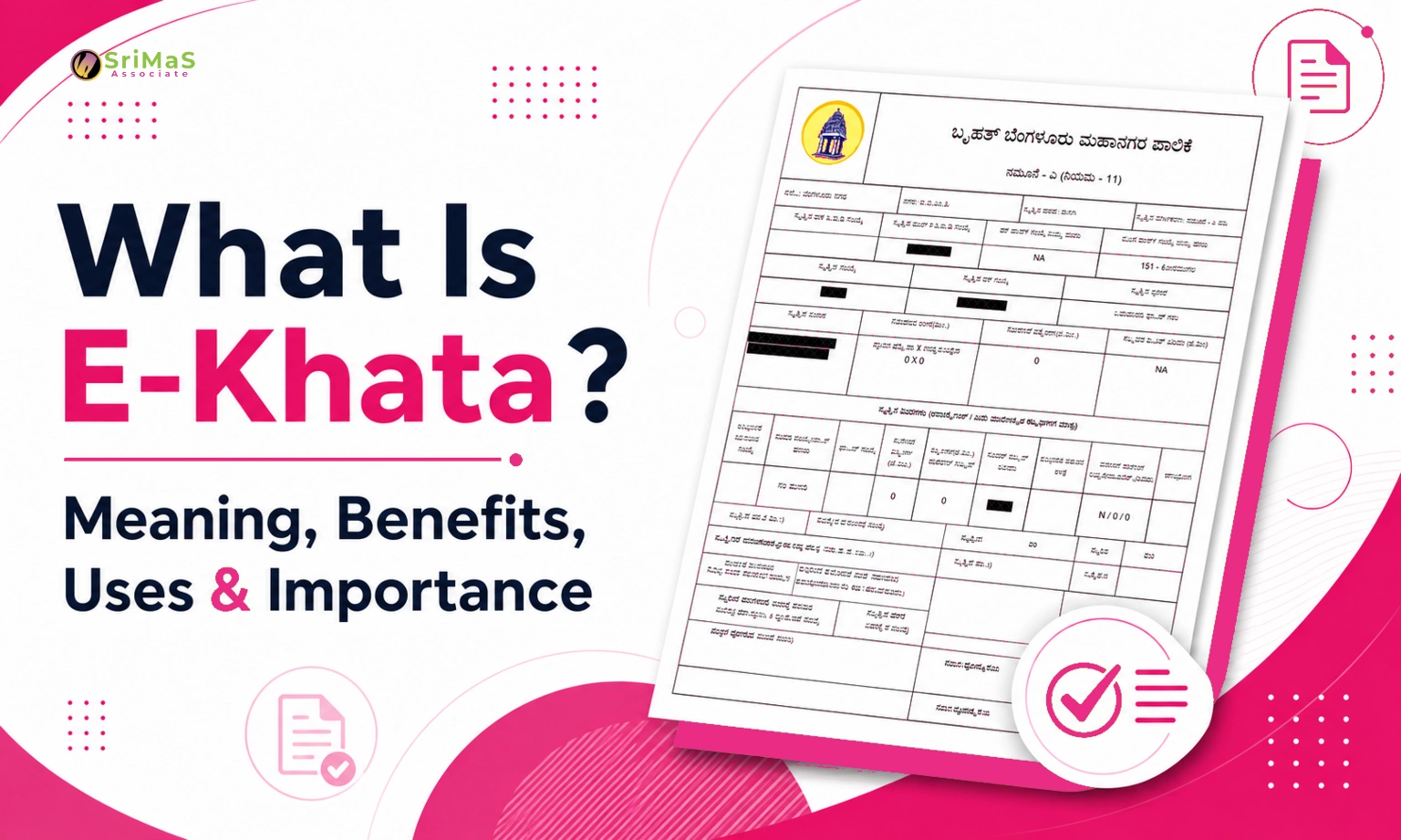
Khata is a property account record maintained by a local municipal authority. It contains important property details such as owner name, property location, property size, tax details, and identification number.
In cities like Bengaluru, people often refer to BBMP Khata, Khata Certificate, Khata Extract, and e-Khata. Khata is important for property tax payment, building plan approval, property transfer, and many municipal services.
A Khata does not replace the sale deed. A sale deed proves ownership transfer, while Khata is a municipal property record used for tax and civic administration.
What Is e-Khata?
e-Khata is the digital version of Khata. It allows property details to be recorded, verified, updated, and accessed online through the respective official system.
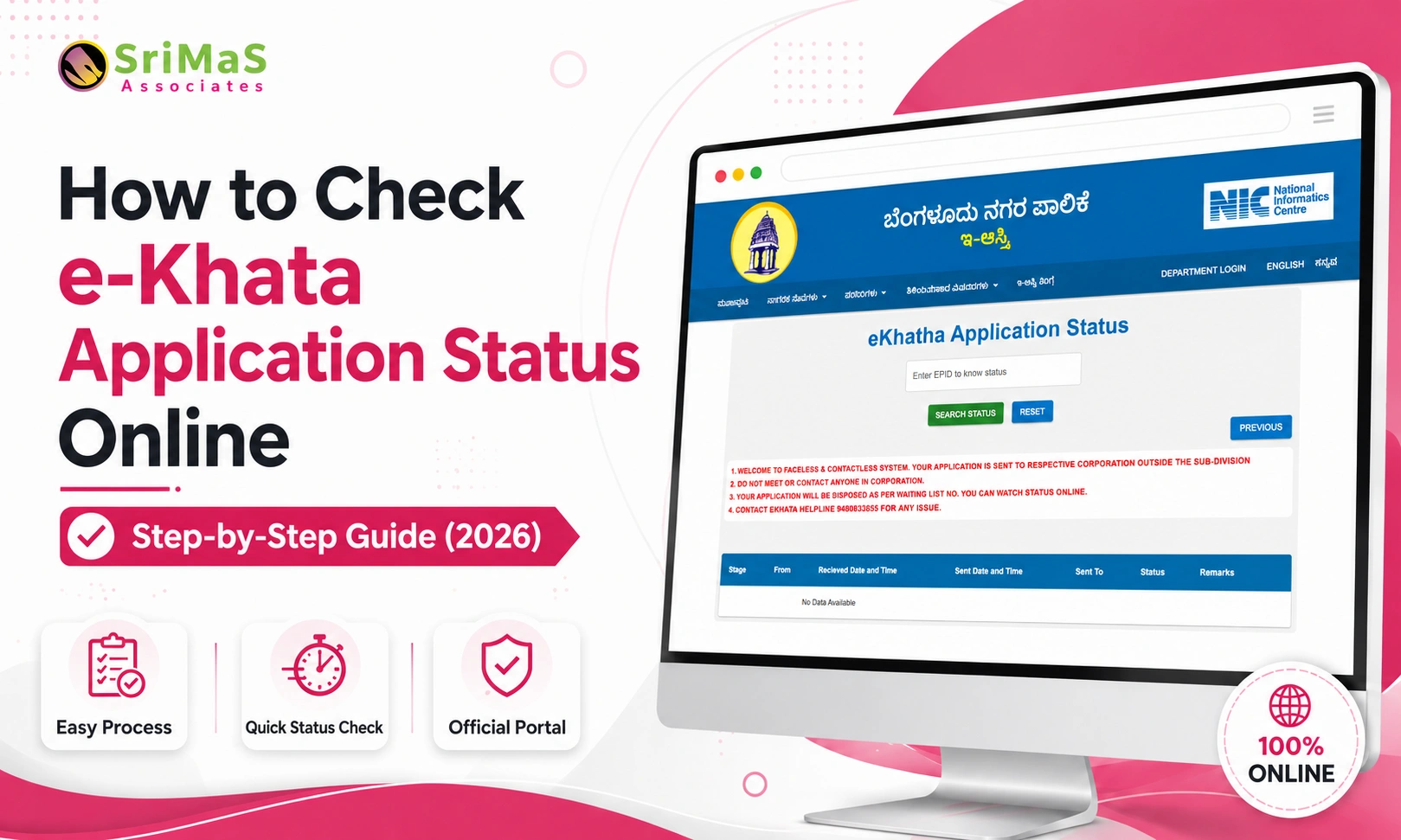
For property owners, e-Khata makes the process more transparent because they can track application status, verify property details, and download or access digital Khata records where the service is available.
In Bengaluru, BBMP/GBA e-Aasthi services are used for e-Khata, new Khata, Khata transfer, amalgamation, and other property-related services.
E Swathu vs Khata: Main Difference
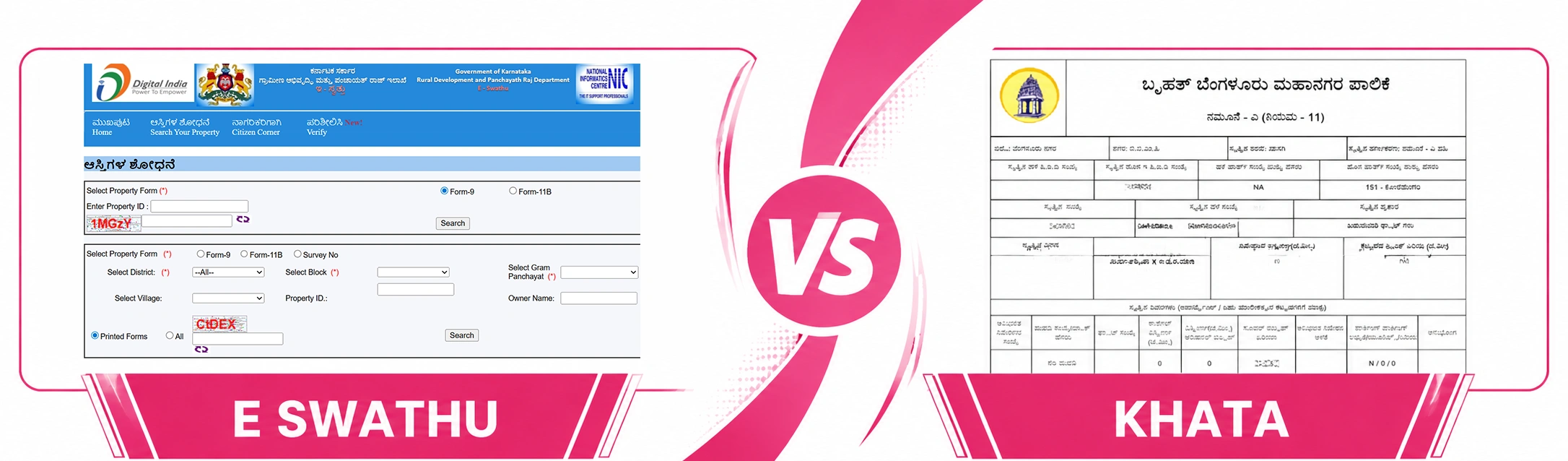
Point of Difference | E Swathu | Khata |
Meaning | Digital property record system for Gram Panchayat properties | Municipal property account record |
Area Covered | Gram Panchayat areas | Municipal areas, city corporations, BBMP areas |
Main Documents | Form 9, Form 11A, Form 11B | Khata Certificate, Khata Extract, e-Khata |
Issuing Authority | Gram Panchayat / Panchayat Development Officer | Municipal authority such as BBMP or city corporation |
Main Use | Property tax record, registration support, rural property verification | Property tax, municipal record, plan approval, transfer, civic services |
Common Search Terms | E Swathu Karnataka, Form 9, Form 11, E Swathu property search | Khata certificate, Khata extract, BBMP Khata, e-Khata Karnataka |
Property Type | Mostly non-agricultural properties in Gram Panchayat limits | Properties in urban local body limits |
Digital Verification | Available through E Swathu portal | Available through e-Khata / local body portal where applicable |
When Do You Need E Swathu?
You may need E Swathu if your property is located under Gram Panchayat limits. It is especially important when you are dealing with non-agricultural land, Gramathana sites, converted land, approved layouts, or government housing scheme properties in Panchayat areas.
E Swathu may be required for:
- Property registration in Gram Panchayat limits
- Verification of Form 9 and Form 11
- Property tax-related records
- Checking whether property details are available online
- Buying or selling non-agricultural property in rural or semi-urban areas
- Avoiding fake or unauthorized property documents
Before buying a property in a Gram Panchayat area, it is important to check whether the property has proper Form 9 and Form 11 records.
When Do You Need Khata?
You may need Khata if your property is located within a municipal area, city corporation, or BBMP limits. Khata is required for property tax payment and many civic property services.
Khata is commonly needed for:
- Paying property tax
- Applying for building plan approval
- Getting a Khata Certificate
- Getting a Khata Extract
- Khata transfer after sale or inheritance
- Applying for utilities or civic services
- Updating municipal property records
- Verifying property details in urban areas
For properties in Bengaluru, BBMP Khata or e-Khata is especially important for smooth property-related work.
Is E Swathu the Same as Khata?
No, E Swathu and Khata are not the same. E Swathu is mainly used for Gram Panchayat property documentation, while Khata is used for municipal property records.
However, both serve a similar broad purpose: they help local authorities maintain property details and tax-related records. The difference lies in the location of the property, the issuing authority, and the type of record issued.
If your property is under a Gram Panchayat, you should check E Swathu records. If your property is under BBMP or another municipal body, you should check Khata or e-Khata records.
E Swathu vs Khata for Property Registration
For property registration in Karnataka, the required documents depend on where the property is located. In Gram Panchayat areas, Form 9 and Form 11 documents from E Swathu may be important for registration of non-agricultural properties.
In municipal areas, Khata-related documents such as Khata Certificate, Khata Extract, tax paid receipts, and other ownership documents may be required depending on the property type and local body rules.
It is always better to verify property records before registration to avoid legal, tax, or documentation problems later.
Documents Commonly Checked for E Swathu
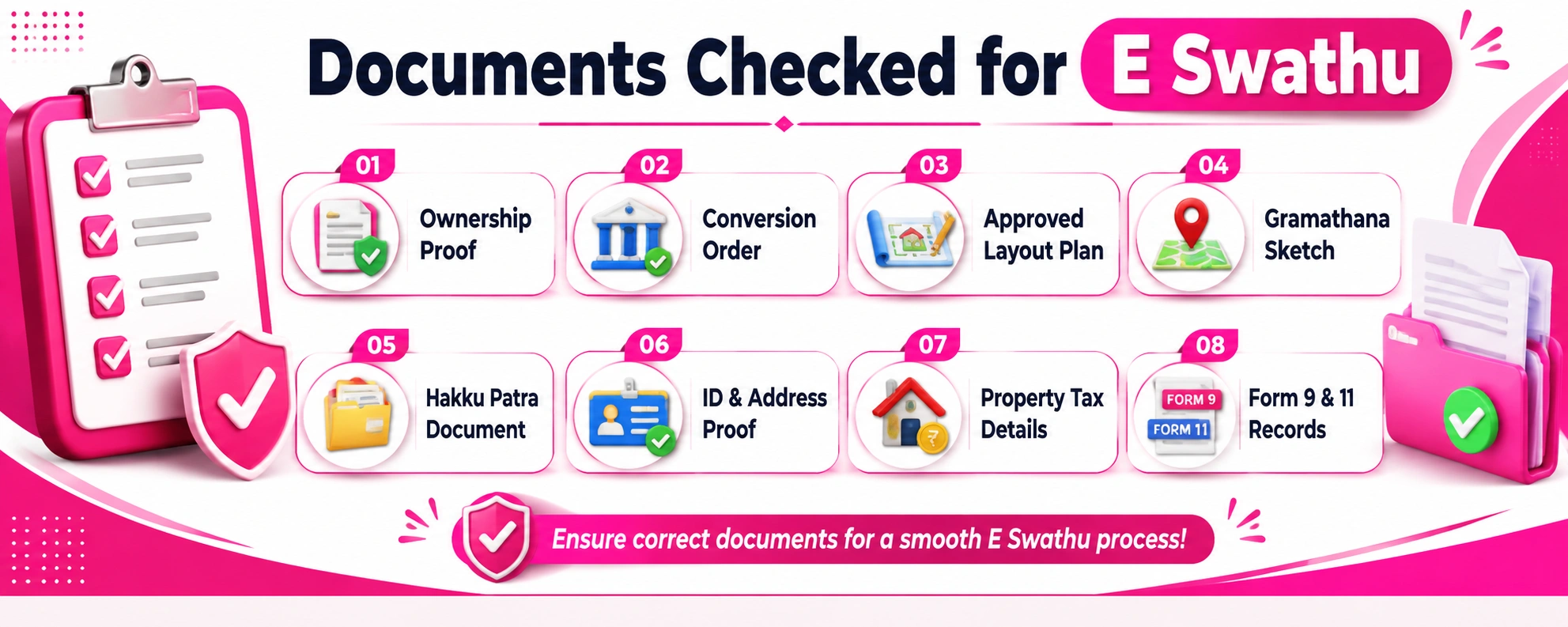
For E Swathu-related property verification, these documents may be checked depending on the property category:
- Ownership documents
- Conversion order, if applicable
- Approved layout plan, if applicable
- Gramathana sketch, if applicable
- Hakku Patra or government housing scheme document, if applicable
- ID proof and address proof of applicant
- Property tax details
- Form 9 and Form 11 records
The exact document requirement may change based on the nature of the property.
Documents Commonly Checked for Khata
For Khata or e-Khata-related services, these documents are commonly required depending on the local body and service type:
- Sale deed
- Previous Khata details, if available
- Property tax paid receipts
- Encumbrance Certificate
- Possession Certificate, if applicable
- Building plan approval, if applicable
- Identity proof
- Address proof
- Property photo or location details, where required
For Khata transfer, documents may change depending on whether the transfer is due to sale, inheritance, gift deed, partition, or court order.
Why Understanding E Swathu vs Khata Is Important
Understanding the difference between E Swathu and Khata helps property owners avoid confusion during buying, selling, registration, tax payment, and property verification.
If you check the wrong record system, you may miss important property details. For example, a Gram Panchayat property may need E Swathu Form 9 and Form 11 verification, while a BBMP property may need e-Khata or Khata certificate verification.
Correct property record verification helps in:
- Safer property purchase
- Better legal clarity
- Smooth registration process
- Proper tax payment
- Reduced risk of fake documents
- Easy property transfer
- Better civic record maintenance
Common Mistakes Property Buyers Should Avoid
Many buyers make documentation mistakes because they do not understand the difference between E Swathu and Khata.
Avoid these common mistakes:
- Assuming E Swathu and Khata are the same
- Buying Gram Panchayat property without checking Form 9 and Form 11
- Buying urban property without checking Khata or e-Khata
- Depending only on sale deed without verifying local body records
- Ignoring property tax payment history
- Not checking whether the document can be verified online
- Not confirming whether the land is agricultural or non-agricultural
- Not checking local authority approval for layout or conversion
Before finalizing any property, always verify records with the concerned official department or local authority.
Conclusion
The difference between E Swathu vs Khata is simple but very important. E Swathu is mainly for Gram Panchayat property records and documents like Form 9 and Form 11. Khata is a municipal property account record used in city corporation and BBMP areas for property tax, civic services, and property record management.
If your property is in a Gram Panchayat area, check E Swathu records. If your property is in a municipal or BBMP area, check Khata or e-Khata records.
Both records are important for property verification, tax payment, and safer property transactions in Karnataka.

Sangeetha Mahesh Author
Sangeetha Mahesh is the founder of SriMas Associate, a company that helps people with licenses, insurance, and managing properties. She has studied many subjects like B.Com, MA, and LLB, and has over 15 years of experience in helping businesses and individuals with complicated rules and managing their assets. Sangeetha's work is focused on providing solutions that are good for her clients, and she works hard to give the best service. On her blog, she shares helpful tips and advice about licenses, insurance, and property management, so that her readers can make smart choices.